

If you've made matcha your morning ritual, you already know what keeps you coming back. Maybe it’s the vivid green and creamy foam, or the steady energy that carries you through without the crash. Or if you’re a Mizuba matcha drinker, there’s nothing that beats the unique flavor profiles of our pure, heritage Japanese matcha.
But if you've glanced at a café’s menu lately, you've probably noticed something harder to ignore. The price of matcha keeps going up.
We spend a lot of time talking about what goes into quality matcha. The shade-grown fields and stone-milled leaves, or the heritage farms of Uji, the hands that tend them season after season. What we talk about less is something you've probably felt but never quite done the math on: the difference between what a tin of good matcha costs at home and what a single cup costs at the counter. That gap is significant, and once you notice it, it's hard to unsee.
What Does a Matcha Latte Cost at a Café?
Let's start with the numbers.
According to NBC News, the average cost of a matcha latte rose from $5.84 to $6.15 per cup in 2025. In major cities, prices run considerably higher. A grande iced matcha latte at Starbucks runs $6.80 in Brooklyn, with regional prices ranging from $5.25 in Ann Arbor to $6.01 in Seattle. They've also started charging extra for additional matcha powder.
At specialty cafés sourcing “ceremonial-grade” Japanese matcha with oat milk as the default, prices push $8 or $9, sometimes more. One NerdWallet writer paid $11.50 for a single latte in New York City.
Buy one matcha latte a day, five days a week, at an average of $6.50, and the numbers look like this.
-
Per week: ~$32.50
-
Per month: ~$130
-
Per year: ~~$1,690/year (or nearly $1,700, based on realistically about 52 weeks in a year).
Of course, it’s important to note here at Mizuba, we love our coffee shop and café partners. For one, you are paying for the experience of enjoying the space, hospitality, and an exceptional matcha latte experience. So, don’t read this as us knocking the café life or getting matcha out as a treat! What we do want to highlight is how you can make your matcha habit sustainable. We also care deeply about supporting local coffee shops.
If you do have the budget to get your matcha out on the daily, please do go support your local independent coffee shop!
Why Are Café Matcha Prices Rising?
What you're paying for at a café is also costing the operators significantly. There’s the labor, overhead, rising inflation, (hopefully) quality ingredients, and the skill it takes to craft consistent beverages. But prices are also rising because of forces far upstream in Japan's tea fields.
The 2025–2026 matcha market is experiencing a structural price reset. Tea prices increased sharply across all varieties. According to the Kyoto Tea Industry Chamber of Commerce, hand-picked Tencha rose 20.2% year over year, while machine-picked Tencha increased 22.4%. Other teas saw larger gains, with Gyokuro, Kabusecha, and Sencha rising 50–80%. Karinaoshi (aracha, or raw material for hojicha) saw the biggest jump, increasing 138% and reaching more than four times its 2023 price.
Supply is down. Demand, meanwhile, keeps climbing. Matcha sales in the U.S. have grown 86% over the past three years, according to NIQ data reported by The Associated Press. Japan’s matcha exports have surged as global demand rises, with exports reaching record levels in recent years.
Cafés are absorbing some of those cost increases as best they can. The rest lands on your receipt.
What Does Matcha Actually Cost to Make at Home?
Here's where the math gets interesting.
A home matcha latte uses roughly 2 to 4 grams of powder per serving. A 30g tin gets you somewhere between 10 and 15 lattes, depending on how you like it.
Take Mizuba's Daily Matcha at $25 for 30g. Stone-milled, first-flush, authentic Japanese matcha crafted for everyday drinking.
-
At 2g per latte: ~$1.67 per serving (matcha only)
-
At 3g per latte: ~$2.50 per serving (matcha only)
Add 8 to 10 oz of oat milk, which runs about $0.50 to $0.75 at home, and your total cost lands between $2.17 and $3.25 per latte. And you don’t have to guess that it’s made with quality, traceable, stone-milled Japanese matcha.
A café may charge $6.50 for the same drink. The difference per cup is roughly $3.25 to $4.35. Across a month of daily lattes, you're looking at $97 to $130 back in your pocket (....to buy more matcha. We won’t judge).
|
Café Latte |
Homemade with Mizuba Daily Matcha |
|
|
Cost per serving |
$6.15–$6.80+ |
~$2.15–$3.25 |
|
Monthly (20 lattes) |
$123–$136+ |
$43–$65 |
|
Annual (240 lattes) |
$1,476–$1,632+ |
$516–$780 |
The savings at the annual level approach $800–$1,000, and that's even using a genuine, high-quality matcha.
What’s Behind Your Café Matcha?
A café matcha latte is often a carefully crafted beverage, designed to balance the flavors of matcha, milk, sweetness, and other ingredients. Part of the appeal is the experience itself, in that you’re enjoying a drink prepared by someone who knows how to bring those flavors together or highlight a specialty drink that the cafe is proud of.
Since cafés often create their own recipes, there isn’t always a clear way to know what type of matcha is being used unless the café shares its source. For Mizuba customers, though, that connection is always clear. When you make a Mizuba matcha latte at home or shop at one of our partner locations, you know exactly what’s in your cup and can choose the ingredients that best highlight the matcha’s natural flavor.
What You're Paying for in a Café Matcha Latte
The price on the menu is only part of the story.
-
Sweeteners you didn't ask for: Many café matcha drinks arrive pre-sweetened or made with sweetened powder blends. If you're drinking matcha for clean energy and its health benefits, this matters.
-
Milk choices that aren't yours: At home, you decide.
-
Quality you can't verify: "Ceremonial grade" is an unregulated term. Any brand can print it on a tin. Without transparency, the label means nothing. Mizuba has spent over a decade building direct relationships with our producers so that when we use it, it does.
-
Time. Making matcha at home takes five minutes.
What Do You Need to Make Matcha at Home?
You don't need much to make matcha at home. Here's what makes a real difference:
-
Your matcha: Start with our Daily Matcha ($25 / 30g) or Yama for an approachable everyday latte, or our Organic Signature Matcha ($22+) if you primarily make lattes and blended drinks (it was created for exactly that purpose without compromise on quality).
-
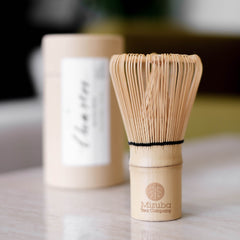
A chasen (bamboo whisk): a nice way to level up your experience. Our Matcha Moment® Essential Tea Set ($57.50) includes everything you need.
-
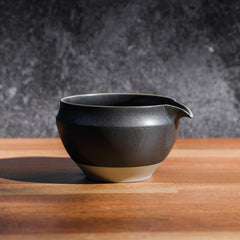
A chawan tea bowl: Whisk the matcha in a handcrafted tea bowl with a small amount of water first (about 2 oz) to create a smooth paste before adding your milk.
-
Your milk of choice: Whole or oat milk froths beautifully and pairs well with matcha's umami. Use what you love! If we’re at home, cashew milk is deliciously creamy.
-
Water at 160–175°F: Not boiling! Boiling water scorches the chlorophyll and can turn your matcha bitter.
A Note on the Matcha Shortage
The 2025 matcha shortage is real and structural. Climate change, aging farmer demographics, and surging global demand have converged, permanently reshaping the industry.
Mizuba always has excellent, affordable matcha because we've spent over a decade building genuine friendships with our producer partners in Uji, Shizuoka, and Yame. In a shortage, relationships matter.
If matcha is a daily ritual for you, the case for making it at home is straightforward.
-
Save $800 to $1,000 a year compared to a daily café habit
-
Get better, traceable matcha than most cafés are using
-
Control every ingredient, milk, sweetener, temperature, ratio
Your matcha moment deserves the full experience. Explore our matcha collection and taste the difference for yourself.
Leave a comment