
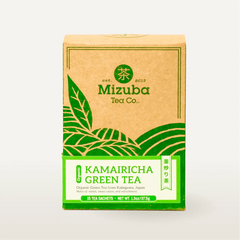

Japanese green teas are defined by how the leaves are grown and processed. Sencha is steamed after harvest. Gyokuro is shade-grown before harvest, then steamed. Matcha is also steamed and shade-grown, but are ultimately processed and stone-ground into powder.
Hojicha takes a different path entirely. The hallmark of the style is in the roasting. Roasting transforms its color, aroma, and flavor into something warmer, smoother, and sweeter.
If you already know the basics of hōjicha (and if you’ve read our introduction to hōjicha, you do), you might be wondering what actually happens inside a tea leaf when it meets high heat, why the aroma of a freshly brewed cup feels so distinctly calming, and how the craft of roasting varies from producer to producer in ways that shape every sip you take.
We’ll walk you through how hōjicha is made and why each of those details matters for the cup in front of you.
Hojicha's Character Begins With The Chemistry of Roasting
Hojicha is made by roasting Japanese green tea leaves at temperatures between 150°C and 200°C. That heat triggers a series of chemical reactions, the most important being the Maillard reaction, the same process that gives bread its crust, coffee its depth, and caramelized sugar its color. Amino acids and sugars within the leaf react together, generating hundreds of new aromatic compounds and fundamentally reshaping the tea's flavor.
As the leaves roast, the bright, vegetal character of green tea gives way to something warmer. You taste toasted grain, roasted chestnut, and a faint caramel sweetness that needs no added sugar to feel satisfying. These flavors are the direct result of the amount and duration of heat applied. The skill of the roaster determines how they develop.
The Maillard reaction also breaks down catechins, the polyphenols responsible for the astringency and bitterness in unroasted green teas. This is why hōjicha finishes clean on the palate, with none of the sharpness that sometimes accompanies sencha or gyokuro. It's also why hōjicha is often the first Japanese green tea that newcomers fall in love with.
You may also see hōjicha spelled as houjicha or hōjicha. We explore the history behind the name in our guide to hōjicha.
What Are Pyrazines, and Why Do They Make Hojicha So Calming?
One of the most compelling things about hōjicha, and one of the least discussed, is its pyrazine content. Pyrazines are aromatic compounds formed during roasting. They’re responsible for the warm, nutty, slightly smoky scent that rises from a freshly brewed cup, and they do more than simply smell pleasant.
The dominant pyrazine in hōjicha, 2,3,5-trimethylpyrazine, has been studied for its effects on the autonomic nervous system.
Research has found that subjects who consumed roasted green tea demonstrated improved performance on mental tasks and showed markers associated with reduced fatigue, with researchers noting that aromatic stimulation from the tea appeared to exert positive physiological effects.
In simpler terms, the scent and flavor of hōjicha appear to help your body shift from a state of stress into a state of rest.
This research is meaningful because it points to a relaxation mechanism in hōjicha that operates differently from L-theanine's calming effects. L-theanine promotes alpha brain wave activity. Pyrazines work through the olfactory system, meaning the simple act of inhaling steam from your cup contributes to the calming experience. The two pathways work in tandem, which may explain why so many hōjicha drinkers describe the tea as uniquely soothing in a way that feels distinct from other green teas.
We find this science fascinating because it helps explain something that tea drinkers in Japan have known for generations. A cup of hōjicha in the evening feels restorative in a way that goes beyond warmth and flavor alone.

Mizuba Hojicha at Hypnos Cafe in Portland, Ore.
How Do Roast Levels Shape Hojicha's Flavor?
If you drink coffee, the idea of roast levels will feel familiar. Hojicha follows a similar logic. The degree of roasting shapes every aspect of the tea, from color and aroma to body and sweetness.
-
A light roast preserves more of the original leaf character. You’ll taste a hint of the underlying green tea, a slightly brighter sweetness, and a more delicate body. The color in the cup tends toward pale amber. Light-roasted hōjicha is lovely for those who appreciate subtlety and want to explore the intersection between green tea and roasted tea.
-
Our bowcha is an excellent example of a lightly roasted hojicha.
-
A medium roast is where many people find their favorite cup. The balance between roasted warmth and residual sweetness hits a comfortable middle ground, with toasted grain notes and a fuller body. This profile translates beautifully into a hōjicha latte, where the roasted character holds its own against steamed milk without becoming aggressive.
-
A dark roast pushes deeper into smoky, almost chocolatey territory. The caramelization is more pronounced, and the mouthfeel is fuller. Dark-roasted hōjicha can remind some drinkers of a very mellow, non-bitter dark roast coffee, which is part of its appeal for people transitioning away from an afternoon coffee habit.
-
A darker, yet smooth roast up your alley? Try our organic hojicha.
Each producer makes deliberate choices about how far to take the roast, and those choices reflect their philosophy, their base material, and the flavor experience they are trying to create. This is one of the reasons hōjicha from different sources can taste remarkably different.
What Is Hojicha Made From? How Base Leaves and Stems Shape the Flavor
The character of a finished hōjicha depends not only on the roast but also on what goes into the roasting chamber.
Most hōjicha begins with bancha, a sturdy, late-harvest green tea with a straightforward, accessible flavor. Bancha-based hōjicha tends to be light, easy-drinking, and well-suited to everyday enjoyment.
Hojicha made from stems offers a different experience. Stem teas, sometimes called kukicha, karigane, or bowcha, bring a naturally sweet, almost creamy quality that carries beautifully through roasting.
When those stems come from the production of high-grade teas like tencha (the base leaf for matcha) or gyokuro, the resulting hōjicha carries a layered complexity that rewards attention. Our Organic Bowcha, for instance, is made from tencha stems, and the difference in depth is something you notice from the first sip.
Some producers use first-flush sencha as their base, which adds more amino acids to the roast, producing a smoother, more nuanced cup. These are sometimes referred to as premium or "special" hōjicha, and they’re worth seeking out if you want to understand the range this tea style can offer.

How to Brew Hojicha: Loose Leaf, Powder, and Cold Brew
One of the pleasures of hōjicha is how approachable it is to brew. Unlike gyokuro, which demands a more precise water temperature, or matcha, which requires a practiced whisking technique, hōjicha welcomes a pretty relaxed approach.
The roasting process has already tempered the leaf's sensitivity to heat, so there’s very little risk of producing a bitter or astringent cup.
-
For loose-leaf hōjicha, use water just off the boil, around 95°C to 100°C. Higher temperatures actually benefit this tea, coaxing out the full range of pyrazine aromatics and deepening the roasted sweetness. Steep for 30 to 45 seconds for a lighter cup, or up to 5 minutes if you prefer more body. Hojicha leaves can be re-steeped at least once, and the second infusion often reveals a sweeter, more mellow side of the tea.
-
For hōjicha powder, a quick whisk or shake with hot water is all you need. Powder dissolves smoothly and delivers a richer, more concentrated flavor because you are consuming the whole leaf rather than an infusion. This is the format most people reach for when making a hōjicha latte.
-
For cold brew (mizudashi), combine loose-leaf hōjicha with cold water and let it rest in the refrigerator for 4-12 hours. Cold extraction produces a remarkably sweet, mellow version of the tea with almost no roasted sharpness. It’s one of the most refreshing things you can drink on a warm afternoon.
Where Does Hojicha Fit into Your Day?
In Japan, hōjicha occupies a particular place in daily life. It’s the tea served after dinner, the tea offered to guests of all ages. It’s poured freely at restaurants because it complements food rather than competing with it.
With roughly 7 to 15 milligrams of caffeine per cup (compared to 60 to 70 milligrams in matcha and around 95 in coffee), hōjicha sits comfortably in the late afternoon and evening hours, where stronger teas and coffee become impractical.
There’s something quietly valuable about a tea that asks nothing of you except that you sit with it for a few minutes. Hojicha doesn’t demand the focused preparation of a bowl of matcha or the precise timing of a fine sencha. It simply offers warmth, flavor, and a moment of calm.
For many of us, that’s exactly the kind of tea we need most.
Explore Hojicha with Us
Our hōjicha collection reflects the range this tea style can achieve.
-
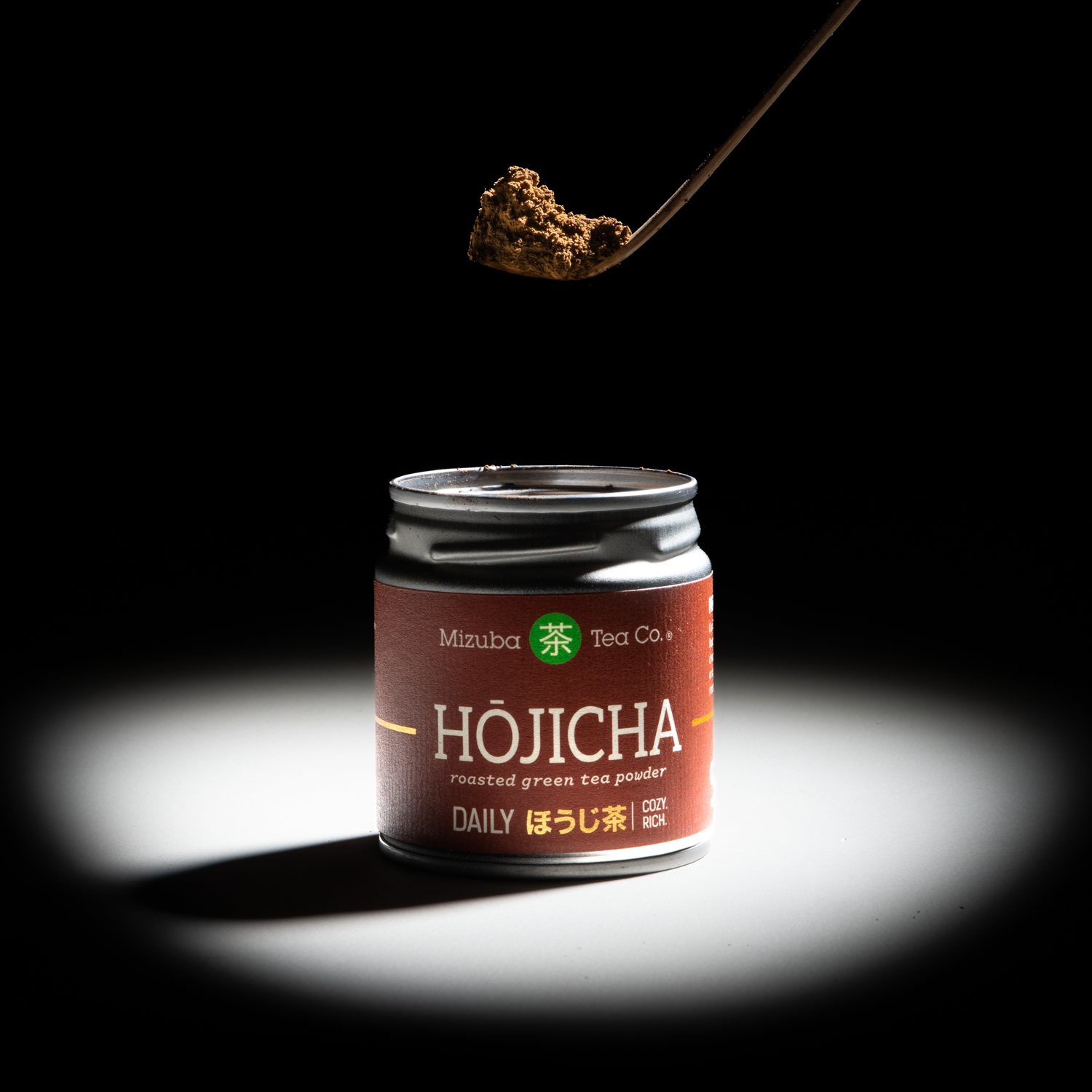
Our Organic Hojicha Powder delivers a smooth, full-bodied base for lattes and baking.
-
Our Organic Bowcha, made from roasted tencha stems, offers a gentler, more nuanced cup that is beautiful on its own.
-
Our Kyô-bancha, a regional Kyoto specialty, provides a window into a style of roasted tea that most people outside Japan have never encountered.
Each of these teas traces back to the producers and regions we’ve worked with for over thirteen years. The roasting traditions, base materials, and careful decisions about heat and timing are the kinds of details that distinguish thoughtfully sourced hōjicha from alternatives. And they’re the details you can taste in every cup.
Have you wondered what the differences are between hōjicha and matcha? Our guide covers the fundamentals, including caffeine comparisons, flavor profiles, and how the two teas are harvested and processed differently.
Leave a comment